Top videos

Bloom’s Taxonomy is a framework that categorizes learning into six levels of cognitive complexity, ranging from basic knowledge recall to advanced critical thinking and creativity. Here's how it applies to critical thinking, with real-life examples:
1. Remembering (Knowledge Recall)
Definition: The ability to recall or recognize facts, concepts, or information.
Critical Thinking Application: Gathering foundational knowledge to base decisions or analyses.
Examples:
Memorizing the key components of a persuasive argument.
Recalling the steps of the scientific method to analyze a problem.
Remembering formulas or data for a business proposal.
Real-Life Example:
Preparing for a test by recalling definitions of critical thinking concepts like "logical reasoning" or "bias."
2. Understanding (Comprehension)
Definition: The ability to explain ideas, concepts, or processes in one’s own words.
Critical Thinking Application: Grasping the meaning of information to apply it effectively.
Examples:
Explaining the difference between inductive and deductive reasoning.
Summarizing the main points of an article.
Real-Life Example:
During a team meeting, explaining how a competitor’s strategy aligns with market trends.
3. Applying
Definition: Using knowledge in new situations to solve problems or carry out tasks.
Critical Thinking Application: Translating theory into practice.
Examples:
Using a logical framework to ****ess the validity of an argument.
Applying statistical tools to analyze survey results.
Real-Life Example:
Deciding which problem-solving technique to use when a project deadline is at risk.
4. Analyzing
Definition: Breaking information into parts to understand relationships and structures.
Critical Thinking Application: Identifying patterns, biases, or gaps in information.
Examples:
Comparing two different arguments to see which one is stronger.
Detecting logical fallacies in a debate.
Real-Life Example:
Analyzing a news article to determine if it’s biased or fact-based.
5. Evaluating
Definition: Making judgments based on criteria and standards.
Critical Thinking Application: Assessing the value of information or arguments and deciding on their validity.
Examples:
Critiquing a research paper for its methodology.
Assessing the credibility of sources in an essay.
Real-Life Example:
Deciding between two job offers by evaluating factors like salary, growth opportunities, and company culture.
6. Creating
Definition: Producing original work or ideas by combining information in innovative ways.
Critical Thinking Application: Generating solutions, designing plans, or constructing arguments.
Examples:
Writing a persuasive essay to advocate for a social change.
Designing a new strategy to solve a workplace problem.
Real-Life Example:
Developing a unique campaign to improve employee engagement in your organization.
Visual Representation of Bloom's Taxonomy
Remember: Gather facts (What is critical thinking?)
Understand: Explain concepts (Why is critical thinking important?)
Apply: Use knowledge (How can critical thinking improve teamwork?)
Analyze: Break down problems (What are the flaws in this argument?)
Evaluate: Judge options (Which solution is the most feasible?)
Create: Innovate solutions (How can we rethink this problem?)
Quick Critical Thinking Activity Using Bloom’s Taxonomy
Scenario: Your team is tasked with solving a budget crisis at work.
Remember: List all fixed and variable expenses.
Understand: Explain why certain expenses are necessary.
Apply: Use financial strategies to reduce costs.
Analyze: Compare which cuts would have the least impact.
Evaluate: Decide on the best cost-saving measures.
Create: Propose a long-term budget plan to avoid future crises.
By progressing through these levels, you can systematically develop advanced critical thinking skills.

Welcome to the Explore Shape Compilation for kindergarten kids! The best way to learn all shapes with the Numberblocks!
Learn to count and have fun at the same time is now possible!
For more, download the official Numberblocks apps;
https://www.learningblocks.tv/numberblocks/apps
Official website;
https://www.learningblocks.tv/numberblocks/home
As seen on CBeebies! Watch Numberblocks full episodes on BBC iPlayer: https://bbc.in/2ZHvNtl
Subscribe for more Numberblocks: https://goo.gl/rF32S8
Visit the Numberblocks on;
Twitter: @numberblocks
Facebook: facebook.com/numberblocks/
Instagram: @numberblocks
We are the Numberblocks! Little blocks with big ideas, having a ton of number fun. Learn how to add, subtract and count the fun and educational way! In this educational CBeebies cartoon for kids, children can learn how to count with basic maths sums, using addition and subtraction with singular blocks that join together to make increasingly bigger numbers.
#Numberblocks #LearnToCount #mathforkids #shapesforkids #maths #12345 #kidscartoon #kidstv #cartoons
In this basic accounting lesson, we share a tip on how to simply remember your debits and credits using the acronym "DEAD CLIC". Check it out, it should make it very easy for you to remember what to debit and what to credit. You will be able to apply it easily when doing your general journal or accounting equation.
Debit and Credit Explained | Accounting Basics: https://youtu.be/qBTpJSiAJBw
Accounting Equation Explained | Accounting For Beginners: https://youtu.be/0H506eq8DZQ
General Journal Explained With Examples | Accounting Basics: https://youtu.be/DjONzUPnhkM
Check out other straight-forward examples on our channel.
We also offer one-on-one tutorials at reasonable rates.
Connect with us:
Email: info@counttuts.com
Our Website: https://Counttuts.com
Our Facebook Page: https://www.facebook.com/Counttuts/

✌SUBSCRIBE FOR MORE VIDEOS: http://bit.ly/2F48qzK
📩 [FREE DOWNLOAD] 7 SECRETS OF MAKING YOUR OWN SONGS: http://eepurl.com/geN6WT
🎤 SING THE KARAOKE VERSION
→ Practice your skills: https://www.jamcampus.com/mitosis-song/
🔥NEED A VIDEO CREATED FOR YOUR COMPANY?
→ Contact me now: andrew@waterbearlearning.com
→ See full portfolio: https://waterbearlearning.com/our-recent-work/
🎤 MORE JAM CAMPUS VIDEOS
→Watch more Science Songs: http://bit.ly/2F0FJnb
→Watch more History Songs: http://bit.ly/2HV8VOf
→Watch more Math Songs: http://bit.ly/2F0d9GT
📷 EQUIPMENT I USE
→ Canon EOS M6 Camera: https://amzn.to/2yXPyDP
→ Canon EF-M 11-22 Lens: https://amzn.to/2KwOHyM
→ Canon EOS M Mount Adaptor: https://amzn.to/2tHYfMZ
→ Audio-Technica AT2020 Mic: https://amzn.to/2yYGH4W
→ Sony MDR1A Headphones: https://amzn.to/2KhHqTY
→ Adobe Creative Suite Editing Software: https://amzn.to/2KuszF1
✅ CONNECT WITH US
→ Blog: https://www.jamcampus.com
→ Facebook: https://www.facebook.com/jamcampus
→ Soundcloud: https://soundcloud.com/jamcampus
→ Email: andrew@jamcampus.com
Lyrics:
Thinking about cells
They can reproduce and divide all by themselves
One of two division forms known as mitosis
A mother cell divides into two identical daughters, perfect copy
Remember this, two identical copies, K?
Two sets of chromosomes, nucleus DNA
Most cell divisions in your body’s system used for your development
And old cells that get worn out, mitosis makes perfect copies, ah
Let’s start with the interphase
Right before mitosis takes place
The DNA within the cell is copied
And centrosomes copied, the role this will play is a key
And now we move to the prophase
where chromosomes condense into x-shapes
mitotic spindle grows, extends to opposite poles
And hey, dissolve the nuclear membrane
Metaphase is the next one
Chromosomes spindle into the middle and then they’re all lined up
Every chromosome has two kinetochores
With microtubules secured to opposite spindle poles
Hey, and how we on to the Anaphase
When sister chromatids separate
Thanks to the motor proteins
Moving along microtubules as molecular machines
Oh hello, Mr. Telo (phase!)
Almost done dividing into two, then onto cell growth
That mitotic spindle disappear
And new nuclei start to form here and here
And when the cytoplasm splits
Concurrent with telophase, it’s called cytokinesis
It’s different whether your cell is in plants or animals
Just remember after this, you have two identical cells
Inter, Pro, Meta
Ana, Telophase
Inter, Pro, Meta
Ana, Telophase
- - - - -
Lyrics and performance by Jam Campus
Instrumental composition by: https://www.fiverr.com/napbak

Learn how to draw the Numberblocks from 1 to 10!
For more, download the official Numberblocks apps;
https://www.learningblocks.tv/numberblocks/apps
Official website;
https://www.learningblocks.tv/numberblocks/home
As seen on CBeebies! Watch Numberblocks full episodes on BBC iPlayer: https://bbc.in/2ZHvNtl
Subscribe for more Numberblocks: https://goo.gl/rF32S8
Visit the Numberblocks on;
Twitter: @numberblocks
Facebook: facebook.com/numberblocks/
Instagram: @numberblocks
We are the Numberblocks! Little blocks with big ideas, having a ton of number fun. Learn how to add, subtract and count the fun and educational way! In this educational CBeebies cartoon for kids, children can learn how to count with basic maths sums, using addition and subtraction with singular blocks that join together to make increasingly bigger numbers.
#Numberblocks #LearnToCount #count1to10
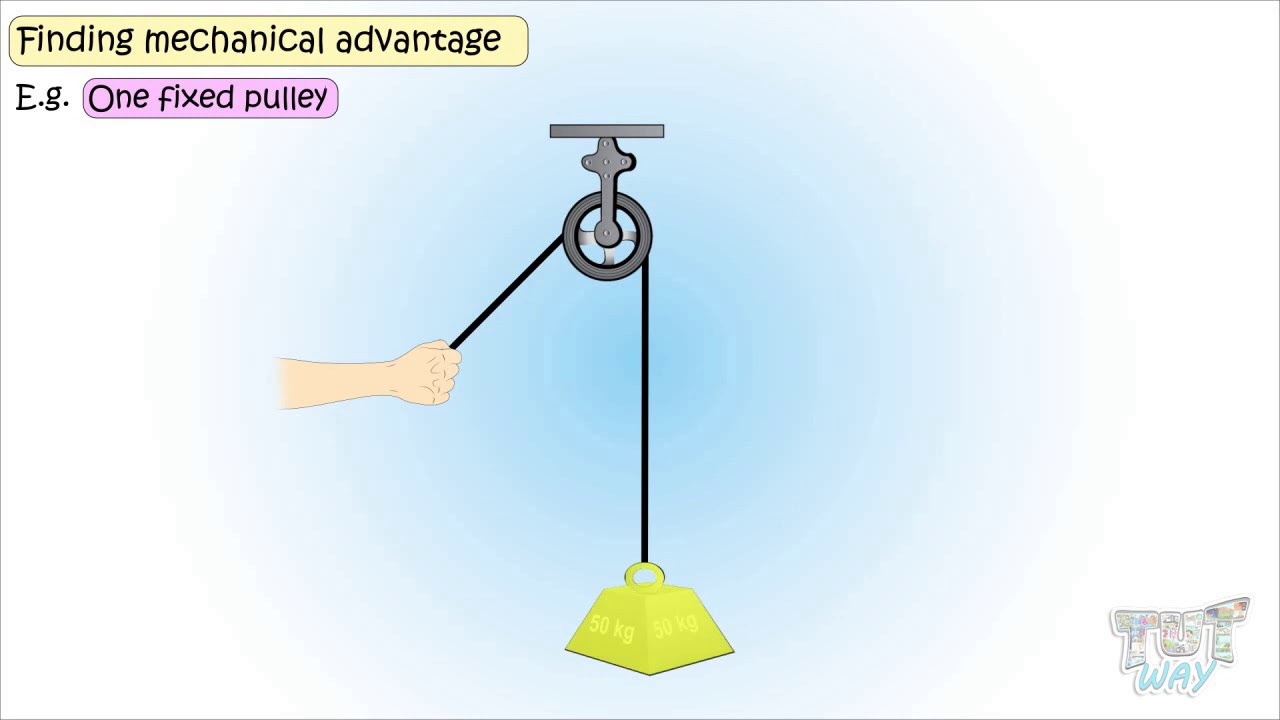
#Pulleys #CompoundPulleys #TypesOfCompoundPulleys
This video is part of a playlist having the following videos. Watch all of them in sequence for a better learning experience.
Enjoy learning :)
Video No.1: Simple Machines(Part-1)
https://youtu.be/JlA6T_64o0c?l....ist=PLoPH9JUqy7EQITA
Video No.2: Simple machines (Part-2)
https://youtu.be/NcmRJspWyNo?l....ist=PLoPH9JUqy7EQITA
Video No.3: Simple Machine – Lever and its types
https://youtu.be/5HTaJ2mCGTw?l....ist=PLoPH9JUqy7EQITA
Video No.4: Lever | Effort arm and load arm of a Lever
https://youtu.be/HAhf311RZkY?l....ist=PLoPH9JUqy7EQITA
Video No.5: Calculating Mechanical Advantage of Lever
https://youtu.be/wIaHQsxGj78?l....ist=PLoPH9JUqy7EQITA
Video No.6: Gears(Part-1) | Characteristics | Gearing Up | Gearing Down
https://youtu.be/0RGzUQ6LJnw?l....ist=PLoPH9JUqy7EQITA
Video No.7: Gears(Part-2)Types and Functions
https://youtu.be/f8lqpMLZlBc?l....ist=PLoPH9JUqy7EQITA
Video No.8: Simple Machines–Compound Pulleys and its Types
https://youtu.be/NOeRoLgvYZM?l....ist=PLoPH9JUqy7EQITA
Video No.9: Simple Machines–Pulley and its types
https://youtu.be/EhI-mmQMVkU?l....ist=PLoPH9JUqy7EQITA
Our young ones can learn about the following topics by watching this short educative video:
Topics Covered:
• Compound pulleys
• Block and tackle
• Types of compound pulleys
• The mechanical advantage of compound pulleys
• Uses of pulleys in our daily life
I hope you liked our video.
Kids should spend time watching informative videos and expand their knowledge day by day.
Kids retain what they see in audio-visual lessons so make them watch informative videos rather than cramming things.
If you want to learn any topic, please free to write to us, we will upload the video to help you out as soon as possible.
We can also create a customized u tube playlist for the topics you want to learn.
Your feedback is important to us.
Stay connected with us:
tutwayhelpdesk@gmail.com
Facebook: https://www.facebook.com/tutway/
https://www.tutway.com/
About us:
Welcome to Tutway.
A unique platform where learning is fun.
Now there is no distinction between kids’ fun time and study time.
At Tutway, we believe in a very simple idea that audio-visual learning is the most effective tool for grasping knowledge. Many researchers have proven that kids learn a lot by playing interactive games and watching audio-visual animated lessons as compared to reading from books.
That's when Tutway comes to the rescue.
Tutway is a supplementary education program where kids can learn at their own pace. The students can watch animated videos that are so meticulously made that they can understand even the most complex concepts very easily. There is a question bank at the end of each video where students can answer those questions multiple times and test whether they have grasped knowledge completely or not.
We have information systems embedded in the program where parents can monitor real-time performance of their kids and get up to date information about their performance, including quizzes attempted and the marks got in each quiz, both in tabular and graphical formats. Regular reports are e-mailed to the parents so that the parents can analyze their kids’ performance.
If we want to learn high-level concepts, we should have a clear understanding of the basic concepts. For instance, if kids don't know about addition and subtraction, they cannot do multiplication, and if they don't know about multiplication, they cannot do division, and if they don't have knowledge of these four basic operations, Algebra cannot be done by them, and it goes on and on.
The same applies to the English language if kids don't have sound knowledge of grammar and vocabulary; it becomes extremely difficult for them to have their communication skills.
Knowledge of the scientific concepts is also required for observing physical, chemical, biological phenomena happening all around us.
That is why; Tutway has thousands of animated videos on Maths, English, and Science to clear the basics of these subjects. It perfectly suits most of the educational needs of most of the students, regardless of their learning abilities.
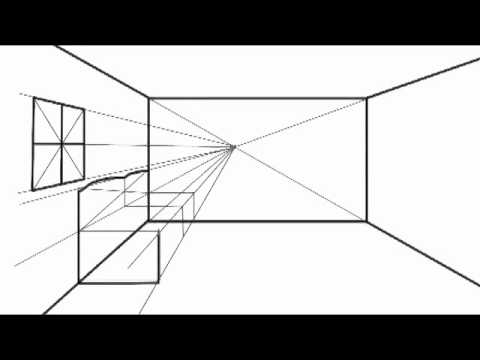
This video shows how to draw a room using one point perspective. To make it more interesting, try placing your vanishing point somewhere else instead of in the centre as illustrated in this video: http://www.youtube.com/watch?v=7ZYBWA-ifEs.
Skitch was used to draw the picture with SnapzPro to screencast. The video file was then imported into iMovie to add the titles, music and narration.
Help feed me by making a small donation to help this channel grow: https://www.buymeacoffee.com/furanku
Feel free to connect with me on social media here: https://linktr.ee/frankcurkovic
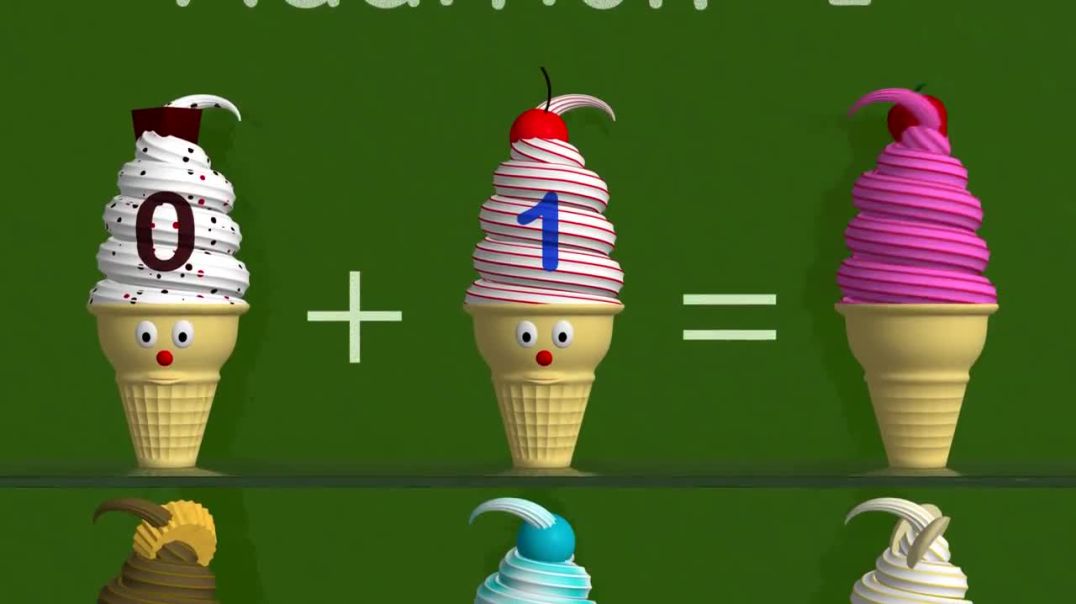
Addition in math is a process of combining two or more numbers. Addends are the numbers being added, and the result or the final answer we get after the process is called the sum. It is one of the essential mathematical functions we use in our everyday activities.
Most gas exchange surfaces are extremely thin (sometimes just one cell thick), ensuring a short diffusion pathway across the exchange surface. They will also have a large surface area to volume ratio which provides more space for the diffusion of gases.

Learn how to subtract money in this video from our Grade 1 Math course.
View our full list of course offerings:
https://www.virtualelementarys....chool.com/register.p
Copyright © 2021 by D2L Corporation. All rights reserved. Except where otherwise noted, all content is created and owned by D2L Corporation.

Grade 8 Mathematics
There are different tests which can be used to detect carbohydrates, proteins and lipids.
They involve adding a reagent to a food sample which changes colour depending on what biological molecules are present.

A song to help my Biology students memorize the processes of Photosynthesis and Cellular Respiration.

Reading is making meaning from print. It requires that we: Identify the words in print – a process called word recognition. Construct an understanding from them – a process called comprehension. Coordinate identifying words and making meaning so that reading is automatic and accurate – an achievement called fluency.

Here is a song I created for my 6th grade science students. I hope you enjoy
Molecules through the membrane
Selectively permeable part
Diffusion where molecules moving
High to low is this sort
They tell me water p****es out and in
Through the permeable membrane
Well osmosis how the diffusion of water goes by
Water that cells need
In diffusion molecules moving
Goes from higher to the lower
Osmosis water p****ing in/out
Of cells makes it swell or get small
So both these types don't need energy
They are forms of p****ive transport
Active while moving from low to high
Requires use energy to cross
Cell absorbing substance from the world
Cell membrane will p**** objects
Both the in and out is p****ive transport
No energy for process
What if cell needs to use power to run
move molecules in reverse?
Active transport use special proteins
Picks up and immerse
In diffusion molecules moving
Goes from higher to the lower
Osmosis water p****ing in/out
Of cells makes it swell or get small
So both these types don't need energy
They are forms of p****ive transport
Active while moving from low to high
Requires use energy to cross
Requires energy to cross
Requires energy to cross
Requires energy to cross
Requires energy
something that actually exists; reality; truth: Your fears have no basis in fact. something known to exist or to have happened: Space travel is now a fact. a truth known by actual experience or observation; something known to be true: Scientists gather facts about plant growth.

Numeracy

In this basic accounting lesson, we explain what the General Journal is, why we record transactions on the General Journal, and how to record the transactions. We go through various Journal Entries examples where we record accounts such as inventory, bank, accounts payable, loans, equipment, depreciation, and accumulated depreciation.
How to easily Remember DEBITS and CREDITS | Simple Tip: https://youtu.be/_AKoCgOlTcw
Debit and Credit Explained | Accounting Basics: https://youtu.be/qBTpJSiAJBw
Accounting Equation Explained | Accounting For Beginners: https://youtu.be/0H506eq8DZQ
General Ledger (T Accounts) | Explained with Examples: https://youtu.be/3b4qFwLU3ZE
Other Journal entry Examples:
Depreciation & Accumulated Depreciation Journal Entry and Balance Sheet Recording: https://youtu.be/oBfFP_nFxsM
Sales On Credit - Perpetual Inventory System Journal Entry: https://youtu.be/krhLje8L4IA
Perpetual Inventory System Explained with Journal Entries Example: https://youtu.be/l_Nxoqsyf-Q
Join our live sessions: https://counttuts.com/events/
Check out other straightforward examples on our channel.
We also offer one-on-one tutorials at reasonable rates.
Connect with us:
Email: info@counttuts.com
Our Website: https://Counttuts.com
Our Facebook Page: https://www.facebook.com/Counttuts
Support our Efforts: https://www.patreon.com/Counttuts

What is Homeostasis? | Physiology | Biology | FuseSchool
Homeostasis is a term first defined by Claude Bernard in 1865. It means maintaining a constant internal environment.
Senses all around the body are measuring various things and sending the information back to the brain. The brain then does its best to keep all these things stable and constant to keep the body working properly. Homeostasis is maintaining a constant internal environment.
What kind of things need to be kept constant in the body? It's very important to keep our temperature the same, at around thirty seven degrees Celsius. You can find out more about this in the video on temperature regulation. You also need to keep the levels of sugar in the blood constant along with levels of ions and water. Your blood pressure needs to be carefully monitored along with the amount of waste in the blood such as carbon dioxide and urea.
Let's say one of these factors goes too high or low, what is the brain going to do to get it back to normal levels? The answer to that is negative feedback. Negative feedback is the process whether the brain uses either a hormone or the nervous system to send a signal to the part of the body that can rectify the problem. For example, after you eat a meal with your blood sugar level increases. This is detected, and the pancreas will release a hormone called insulin that causes the sugar to be stored in the liver. The blood sugar level will then return to normal.
Negative feedback is the leap from which the body takes a stimulus, reacts by responding accordingly and brings the body back to the normal levels.
So why is homeostasis so important? Our metabolism, which is all the chemical reactions in our bodies that keep us alive, is controlled by enzymes. These enzymes only work in very specific conditions. If these conditions change, they could stop working and we could die.
Luckily, all of this happens without you having to think about it. If you had to do it yourself, you would have to spend all day and night just trying to keep all these things constant and we'd have no time to doing fun like watch videos of cats on the Internet.
SUPPORT US ON PATREON
https://www.patreon.com/fuseschool
SUBSCRIBE to the FuseSchool YouTube channel for many more educational videos. Our teachers and animators come together to make fun & easy-to-understand videos in Chemistry, Biology, Physics, Maths & ICT.
VISIT us at [a]www.fuseschool.org%2C[/a] where all of our videos are carefully organised into topics and specific orders, and to see what else we have on offer. Comment, like and share with other learners. You can both ask and answer questions, and teachers will get back to you.
These videos can be used in a flipped cl****room model or as a revision aid.
Find all of our Chemistry videos here: https://www.youtube.com/playli....st?list=PLW0gavSzhMl
Find all of our Biology videos here: https://www.youtube.com/playli....st?list=PLW0gavSzhMl
Find all of our Physics videos here: https://www.youtube.com/playli....st?list=PLW0gavSzhMl
Find all of our Maths videos here: https://www.youtube.com/playli....st?list=PLW0gavSzhMl
Instagram: https://www.instagram.com/fuseschool/
Facebook: https://www.facebook.com/fuseschool/
Twitter: https://twitter.com/fuseSchool
Access a deeper Learning Experience in the FuseSchool platform and app: www.fuseschool.org
Follow us: http://www.youtube.com/fuseschool
Befriend us: http://www.facebook.com/fuseschool
This is an Open Educational Resource. If you would like to use the video, please contact us: info@fuseschool.org
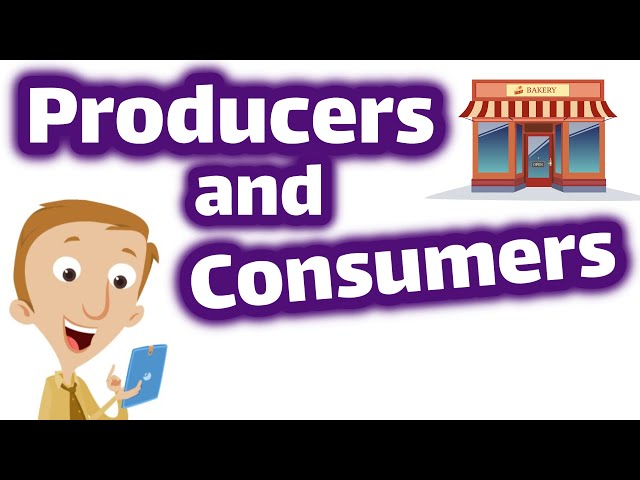
https://www.patreon.com/homeschoolpop In this economics social studies lesson for first and second grade kids you will learn what producers and consumers are and what the difference is between the two! This social studies lesson is simple enough for children to understand and yet enough to grasp this fundamental economic concept!
00:00 Introduction
0:13 What is a consumer?
0:28 What is a producer?
1:00 Examples of producers and consumers
3:03 Even kids can be producers and consumers!
❤️ Homeschool Pop? Join our team and get tattoos here: http://homeschoolpop.com
Thanks for learning with us today! We hope to see you next video!
Homeschool Pop Team