Top videos
Here is a song I created to help my 6th grade students study. I hope you enjoy.
Bladder balloon-like sac
Storing up urine in the pelvis socket
The, the, the kidneys filtering your blood out
The urinary system
Now, body taking in food like, "What up I got a Big Mac!"
You're so filled up by some food in your stomach
Used for repair and for your energy
Your body needs "Man there's some junk ain't needed"
Nutrients going deep, waste products not to keep
Urinary works with lungs and the skin, intestines
All of which rid the waste, keeping balanced chemicals
Only keep what body needs, body will release this...
But it's a quart and a half each day (roughly)
Depends on drinking on, lost in sweat and how you're breathing in
Taking in of medications makes the total amount of the urine
Eating up protein, vegetables
Urea in blood to kidneys
Bean shaped organs near the middle of your back rib cage
Remove urea from blood, removes urea from blood
No for real, ask your Grandpa filtering with the nephrons (Thank You)
Each nephron capillaries-glomerulus
And a small tube called the renal tubule
Water waste substance urea waste substance
Urine it is forming, in nephrons and the tubules
Thin tubes, thin tubes, ureters to bladder
Urine moving ureters 8-10 inches long
Muscles they will tighten, in the walls, moves downward
Small amounts of urine emptied into the bladder
Bladder balloon-like sac
Storing up urine in the pelvis socket
The, the, the kidneys filtering your blood out
The urinary system
Bladder balloon-like sac
Storing up urine in the pelvis socket
The, the, the kidneys filtering your blood out
The urinary system
What you know about a hollow muscle this organ
What you know about your bladder balloon-like thing
It's storing, it's storing urine inside like luggage
It's just trash 'til your body will go, empty
Thank your bladder for holding urine two cups inside it
Holds tight for some 2-5 hours
Circular muscles and you can call them the sphincters
Yeah, that sphincters help to keep all the urine from leaking
Close tightly, not lightly, opening urethra
They pinch the urine from escaping
Rubber bands keeping waste from p****ing
The nerves in bladder tells your body when to use the restroom
To use the potty or the "loo" or head to urinate in
You be like "Oh that toilet, that's hella tight"
Your like "Yo, I feel the urge to urinate"
Feeling the sensation let's do some addition
Bladder it continues filling, that's just when it's reached it's limit
You feel that urge to let it go hurtin'
The nerves they telling your brain, "Do your business"
Your bladder is hurting, yo
And when going number one the brain send signals to all the muscles holding-don't
Squeezing bladder muscles like a stress ball
And as these muscles relax then urine goes
Urine going through
Urethra, Urinate, Yeah!
Bladder balloon-like sac
Storing up urine in the pelvis socket
The, the, the kidneys filtering your blood out
The urinary system
To balance chemicals
It is incredible
Urinary system
From kidneys down to sphincter
To balance chemicals
It is incredible
Urinary system
From kidneys down to Sphincter
Bladder balloon-like sac
Storing up urine in the pelvis socket
The, the, the kidneys filtering your blood out
The urinary system
Perhaps your bladder is full?
Suffixes are letters added to the end of a base word to change its conjugation, word type, or other grammar properties like plurality. For example, take the noun strength: You can add the suffix –s to make it plural (strengths) or the suffix –en to change it into a verb (strengthen).
In sexual reproduction, an organism combines the genetic information from each of its parents and is genetically unique. In asexual reproduction, one parent copies itself to form a genetically identical offspring.
Characteristics of living things
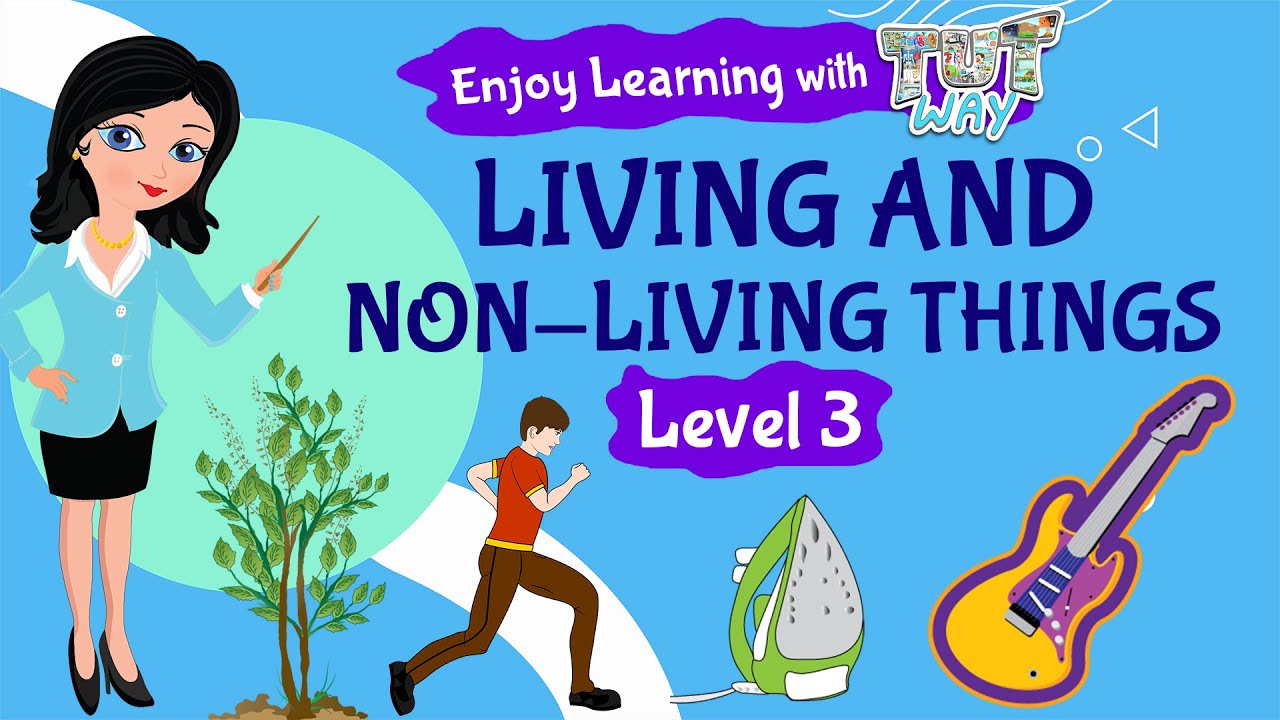
Living things and nonliving things
Characteristics of non-living things
Natural living things and man-made non-living things.
No movement, no breathing, no feeding, and also no reproduction
Feeding, movement, movements in plants, breathing or respiration, excretion, growth, sensitivity, reproduction
Welcome to Tutway, a unique platform where learning is fun !
Now there is no distinction between kids' fun time and study time. Say goodbye to the days of cramming those dull and ponderous books, which made learning a tedious task. We believe in the straightforward idea that audio-visual learning is the most effective tool for learning. Many researchers have proven that kids learn a lot by playing interactive games and watching audio-visual animated lessons compared to reading from books. To understand the new concepts, Kids show more interest in adopting unique ways of learning. We have brought a programme that covers the crucial ideas and makes learning more stable that stimulates the critical thinking of the young learners !
Let's break away from our perception that adopting new learning concepts is challenging. You will find our website & youtube channel very user-friendly and interactive to gain knowledge. Even kids can access the content without constant parental supervision !
Site: https://www.tutway.com/
Email: tutwayhelpdesk@gmail.com
Facebook: https://www.facebook.com/tutway/
Listen to this story read by Miss Measures. Remember to pause the video to answer the questions.

The solar system consists of the Sun and everything that orbits, or travels around, the Sun. This includes the eight planets and their moons, dwarf planets, and countless asteroids, comets, and other small, icy objects. However, even with all these things, most of the solar system is empty space.

Welcome to the Explore Shape Compilation for kindergarten kids! The best way to learn all shapes with the Numberblocks!
Learn to count and have fun at the same time is now possible!
For more, download the official Numberblocks apps;
https://www.learningblocks.tv/numberblocks/apps
Official website;
https://www.learningblocks.tv/numberblocks/home
As seen on CBeebies! Watch Numberblocks full episodes on BBC iPlayer: https://bbc.in/2ZHvNtl
Subscribe for more Numberblocks: https://goo.gl/rF32S8
Visit the Numberblocks on;
Twitter: @numberblocks
Facebook: facebook.com/numberblocks/
Instagram: @numberblocks
We are the Numberblocks! Little blocks with big ideas, having a ton of number fun. Learn how to add, subtract and count the fun and educational way! In this educational CBeebies cartoon for kids, children can learn how to count with basic maths sums, using addition and subtraction with singular blocks that join together to make increasingly bigger numbers.
#Numberblocks #LearnToCount #mathforkids #shapesforkids #maths #12345 #kidscartoon #kidstv #cartoons

The mesophyll is found between the upper and lower epidermis; it aids in gas exchange and photosynthesis via chloroplasts. The xylem transports water and minerals to the leaves; the phloem transports the photosynthetic products to the other parts of the plant.
Most gas exchange surfaces are extremely thin (sometimes just one cell thick), ensuring a short diffusion pathway across the exchange surface. They will also have a large surface area to volume ratio which provides more space for the diffusion of gases.
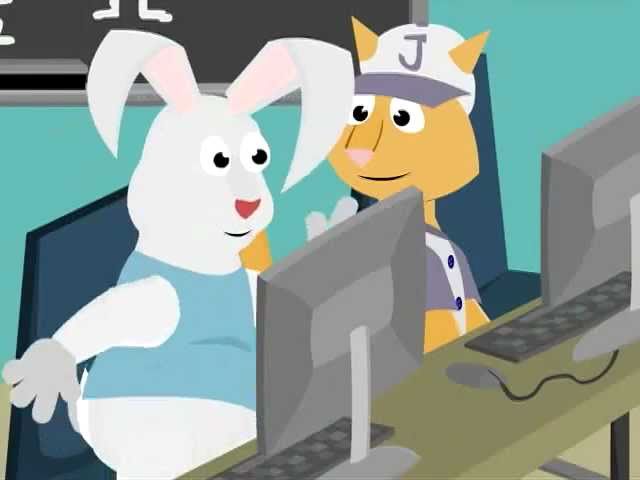
Internet safety for kids is a topic getting much attention because children are being exposed to the Internet at a younger and younger age. IUP Communications Media professor Erick Lauber and his student production team at IUP's Digital Media Institute recently produced this video on Internet safety for kids for the Indiana Area School District. It is currently used as part of the in-school training for students in kindergarten through third grade.
For this video, Lauber received the Broadcast Education Association's Award of Excellence in the Educational and Instructional Video category.
Find out more about IUP's Department of Communications Media:
http://www.iup.edu/commmedia/default.aspx?utm_campaign=social_media&utm_medium=web&utm_source=youtube
Find out more about IUP's Digital Media Institute:
http://www.iup.edu/digitalmediainstitute/default.aspx?utm_campaign=social_media&utm_medium=web&utm_source=youtube

The words include: stamp, stapler, star, starfish, statue, steak, steam, stem, stick, stingray, stone, stool, stop, stork, strawberry, and stump.

Living and Non living Things | Science Grade 3 | Periwinkle
Hi Kids,
All things can be cl****ified between Living & Non Living Things.
Things that can breathe, eat, grow, move, have feelings, produce their young ones and die are called living things.
Things that can not breathe, eat, grow, move, have feelings, produce their young ones and die are called living things.
Watch our other videos:
English Stories for Kids: https://www.youtube.com/playli....st?list=PLC1df0pCmad
English Poems for Kids: https://www.youtube.com/playli....st?list=PLC1df0pCmad
English Grammar for Kids: https://www.youtube.com/playli....st?list=PLC1df0pCmad
Hindi Stories: https://www.youtube.com/playli....st?list=PLC1df0pCmad
Science Videos: https://www.youtube.com/playli....st?list=PLC1df0pCmad
For more such videos on English Stories, English Grammar, English Stories, Poem & Rhymes, Hindi Stories and Poems, Maths, Environmental Studies and Science @ https://www.youtube.com/PeriwinkleKids
Don't forget to subscribe!
Like us on Facebook: https://www.facebook.com/PeriwinkleKids/
Follow us on Twitter: https://twitter.com/Periwinkle_Kids
Follow us on Google Plus: https://plus.google.com/+PeriwinkleKids
Website: http://www.e-periwinkle.in/

Grade 8 English
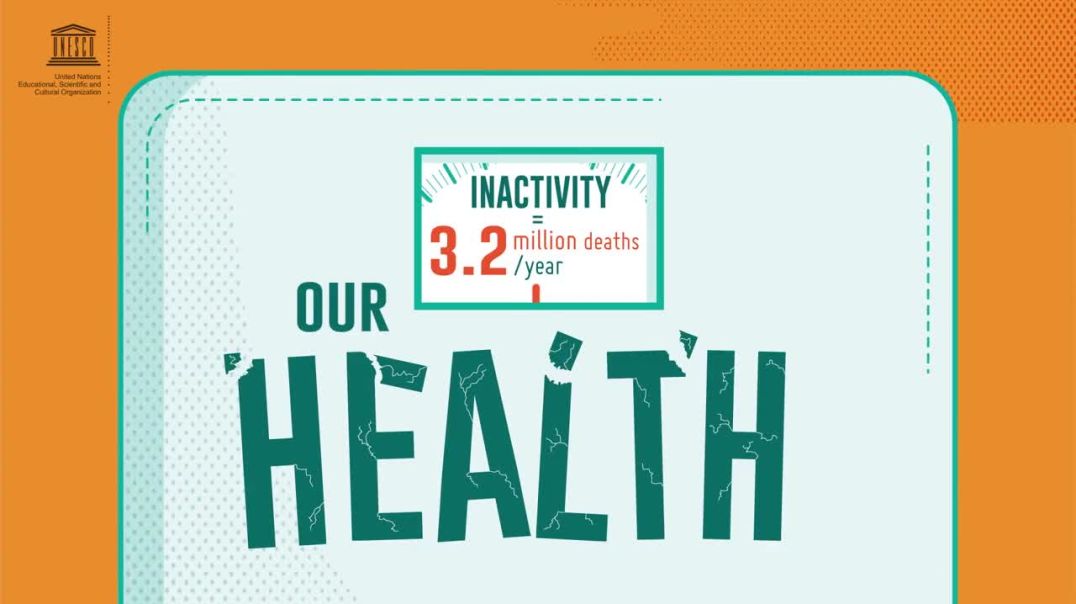
3.2 million people die every year due to lack of exercise. It is time for inclusive & equitable quality physical education for all!

#ExtremeForces #nature
This video is part of a playlist having the following videos. Watch all of them in sequence for a better learning experience.
Enjoy learning :)
Video no.1 Work, Force, and Energy
https://youtu.be/hbj45FhaCD4
Video no.2 Forms of Energy
https://youtu.be/E9OX-y2PErk
Video no.3 Forces(Part-1)Contact and Non-contact
https://youtu.be/pCz3q4VQDXs
Video no.4 Forces(Part-2) Cl****ification of contact and non-contact forces
https://youtu.be/d0Uo14VDnBo
Video no.5 Forces(Part-3)Other Types of Forces
https://youtu.be/LbGln39_SAA
Video no.6 Forces-(Part-4)|Balanced and unbalanced forces
https://youtu.be/-Rjid6hQuww
Video no.7 Forces-(Part-5)Forces in our daily life
https://youtu.be/xWo7aJDbSgw
Video no.8 Forces-(Part-6)- Internal and External Forces
https://youtu.be/K0NY4cUj86Y
Video no.9 Forces(Part-7) Bridge Basics
https://youtu.be/422WNEbdEpg
Video no.10 Forces-(Part-8) | Friction and Grip
https://youtu.be/cEt-B9xIzHU
Video no.11 Forces-(Part-9) Friction-Advantages –Disadvantages
https://youtu.be/Gxjoy4Sj58E
Video no.12 Forces(Part-10) Extreme Forces of Nature
https://youtu.be/XUTg0k8KMVY
Topic Covered:
• Forces
• Extreme forces of nature
• Tornado
• Hurricane
• Earthquake
• Landslide
• Lightening
• Flood
You can watch all the related videos, links are given below:-
Forces(Part-1)Contact and Non-contact | Grade-3,4 | TutWay |
https://youtu.be/pCz3q4VQDXs
Forces(Part-2) Cl****ification of contact and non-contact forces | Science | Grade-3,4 | TutWay |
https://youtu.be/d0Uo14VDnBo
Forces(Part-3)Other Types of Forces | Grade-3,4 | TutWay |
https://youtu.be/LbGln39_SAA
Forces-(Part-4)|Balanced and unbalanced forces |Science| Grade-3,4 | Tutway |
https://youtu.be/-Rjid6hQuww
Forces-(Part-5)Forces in our daily life | Science | Grade-3,4 | TutWay |
https://youtu.be/xWo7aJDbSgw
Forces-(Part-6)- Internal and External Forces | Science | Grade-4,5|TutWay|
https://youtu.be/K0NY4cUj86Y
Forces(Part-7)Bridge Basics|Science | Grade-4,5 | TutWay |
https://youtu.be/422WNEbdEpg
Forces-(Part-8) | Friction and Grip | Grade-4,5 | Science | TutWay |
https://youtu.be/cEt-B9xIzHU
Forces-(Part-9) Friction-Advantages –Disadvantages | Grade-4,5 | TutWay |
https://youtu.be/Gxjoy4Sj58E
Forces(Part-10)Extreme Forces of Nature | Science | Grade-4,5| TutWay |
https://youtu.be/XUTg0k8KMVY
https://www.tutway.com/
Welcome to Tutway.
A unique platform where learning is fun.
Now there is no distinction between kids’ fun time and study time.
At Tutway, we believe in a very simple idea that audio-visual learning is the most effective tool for grasping knowledge. Many researchers have proven that kids learn a lot by playing interactive games and watching audio-visual animated lessons as compared to reading from books.
That's when Tutway comes to the rescue.
Tutway is a supplementary education program where kids can learn at their own pace. The students can watch animated videos which are so meticulously made that they can understand even the most complex concepts very easily. There is a question bank at the end of each video where students can answer those questions multiple times and test whether they have grasped knowledge completely or not.
We have information systems embedded in the program where parents can monitor real-time performance of their kids and get up to date information about their performance, including quizzes attempted and the marks got in each quiz, both in tabular and graphical formats. Regular reports are e-mailed to the parents so that the parents can analyze their kids’ performance.
If we want to learn high-level concepts, we should have a clear understanding of the basic concepts. For instance, if kids don't know about addition and subtraction, they cannot do multiplication, and if they don't know about multiplication, they cannot do division, and if they don't have knowledge of these four basic operations, Algebra cannot be done by them, and it goes on and on.
Same applies to the English language if kids don't have sound knowledge of grammar and vocabulary; it becomes extremely difficult for them to have their communication skills.
Knowledge of the scientific concepts is also required for observing physical, chemical, biological phenomena happening all around us.
That is why; Tutway has thousands of animated videos on Maths, English, and Science to clear the basics of these subjects. It perfectly suits most of the educational needs of most of the students, regardless of their learning abilities.
So hurry up, download the Tutway app and book a free-demo cl**** to make education interactive and fun experience.
VISIT OUR OFFICIAL WEBSITE : https://www.uspstudios.co/<br />WATCH OH MY GENIUS VIDEOS ON OUR WEBSITE TOO : https://www.uspstudios.co/creation/channel/oh-my-genius/5/<br /><br />Check out our new 3D Nursery Rhyme video: http://vid.io/xqRn<br /><br />Follow us on<br />FACEBOOK: http://vid.io/xqRt<br />GOOGLE+: http://vid.io/xqRr<br />TWITTER: http://vid.io/xqRp<br />Check out our new Nursery Rhymes Songs Compilation video here: http://vid.io/xqVD<br />You babies hear a lot of nursery rhymes. Which means you'll learn a lot of English words! The Opposites Song will help your parents and teachers know how good you'll are with the language. Come on, don't give us that face! This isn't a test! Its just to remind you babies that kids songs have an educational purpose too. So, ready? Or do you children want to listen to the nursery song once, before we start? We see heads nodding all around! OK, we'll put up the lyrics too. So it becomes even easier for you'll to learn and remember. Your parents and teachers have their eyebrows raised on you'll! Better show them your little language skills after the rhyme is over!

electric circuit, path for transmitting electric current. An electric circuit includes a device that gives energy to the charged particles constituting the current, such as a battery or a generator; devices that use current, such as lamps, electric motors, or computers; and the connecting wires or transmission lines.

The “onset” is the initial phonological unit of any word (e.g. /c/ in cat) and the term “rime” refers to the string of letters that follow, usually a vowel and final consonants (e.g. /a/ /t/ in cat). Not all words have onsets
What is a simple definition for matter?
Matter is anything that takes up space and can be weighed. In other words, matter has volume and m****. There are many different substances, or types of matter, in the universe.
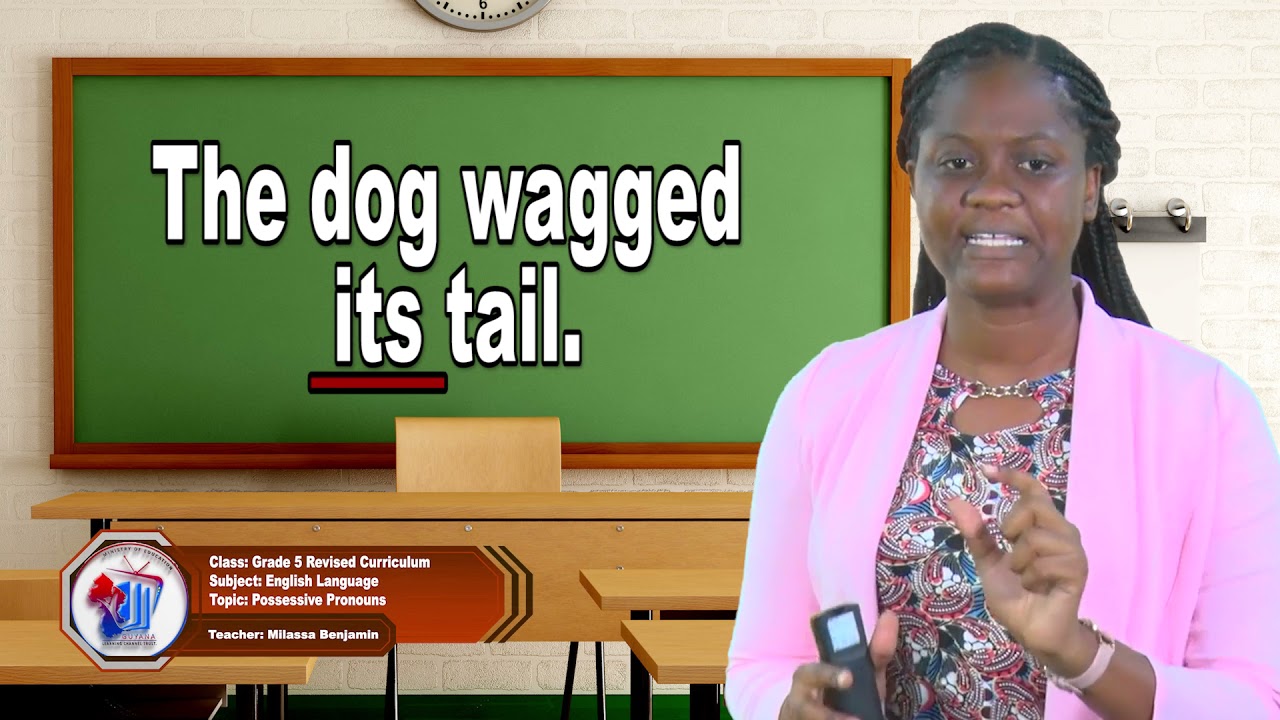
Possessive pronouns are pronouns that are used to indicate the ownership (possession) of something or someone by something or someone else. The English possessive pronouns are mine, ours, yours, his, hers, theirs, and whose.